2012 Annual Conference, Porto
Open Learning Generations
Closing the gap from "Generation Y" to the mature Lifelong Learners
Porto, 6-9 June 2012
DETAILED PROGRAMME
Registration
Conference Dinner and Porto Wine Cellar Visit in Casa Ferreirinha, one of the most prestigious wineries of Portugal
![]() |
||
| You will enjoy every day the great view of the Douro River. | ||
|
Conference Sponsors:
|
For eventual late submissions please contact the Conference Secretariat
The Annual Conference will approach the key questions of learning methodology and technology focusing on the "Open learning generations", the contexts of socially significant target groups: junior and senior e-learners. We will explore their learning cultures, technology use patterns and discuss new approaches in pedagogy and andragogy that respond to them.
I Am A Sort of Guinea Pig for Principles That I Have Advocated
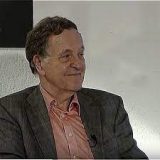
In our series of interviews with keynote speakers at the 2012 EDEN Annual Conference, Steve Wheeler sat down with David White for a chat.
David White is Honourary Director General at the European Commission, and is a passionate believer in lifelong learning. Ahead of his keynote speech at this year’s EDEN conference, to be held in Porto, I asked him some questions about his life, his passions and what he believes about technology supported education. Here is the interview in ten questions...
Details > >SW: Please can you tell readers and delegates a little about yourself, your passions, your interests and perhaps one or two things you are not so keen on?
DW: I am a husband, a father and a grandfather who grew up very happily in a relatively minor province on the outer margins of Europe and who has loved living and working in the multi-cultural environment at the heart of the EU.
Alfred Marshall described economics as the study of people in the general business of life. That is the sort of economics I like. I am not greatly impressed with mathematical models. But the general business of life lets me thrill to music and literature, be drawn to elegant engineering like steam engines and architecture, to the excitement of business, and the challenges of politics, to the history that helps us understand why the world is as it is and the political visions of how it might be. These are all reflections of the extraordinary riches and diversity of people interacting with one another.
We have the good fortune to live in a world that is full of beauty and of interest. The best fun is sharing our experience of them. When we talk about the things that are beautiful and about which we feel excited, they grow bigger.
The best education has something to do with sharing our excitement about the business of life.
SW: You have worked for a considerable part of your career in various roles within the European Commission. What important lessons have you learnt during this time?
DW: Working for the European Commission has made me into a passionate European.
Two experiences show why.
First, when we were preparing for enlargement towards the central and eastern European countries, and while there were still many problems for the central and eastern Europeans countries as they tried to adapt to a radically new situation, I toured the capitals. In the course of these meetings, I met a lot of young officials. We had very different life experiences: I lived in a western economy with a privileged material standard, freedom to choose my own life pattern; they had been brought up in a totalitarian state with all sorts of constraints on their freedom, both material and other. Yet I found that we shared culture, approach and principles. Many of them I would gladly have welcomed into my staff team. Some of them later did join me and I was not disappointed! Europeans have so much in common: far more than we are generally ready to believe.
Second, in negotiations with third countries, I have been enormously impressed by our collective capacity for creativity. We are generally much better at finding creative ways through than others. The reason has something to do with confronting diversity. We may have much in common, but we also have different ways of seeing issues: and that is one of the keys to creativity. Often in Europe we find it difficult to implement our good ideas. We have to learn to do better at that.
I also learned a lot about people. Perhaps I would have learned that anywhere. But in the European Commission, we were working in a multi-cultural, multi-language environment. Not everyone likes that. People tell stories about national caricatures. You know the sort of thing: noisy Italians and silent Finns. Some of the caricatures are less complementary than that. At one level, these caricatures are often true. French people are keen on the vision: Brits are more pragmatic – or are they just muddled? Germans tend to be rather more structured than the Irish. But at another level, these caricatures are entirely false. Everyone is an individual, demanding to be treated with respect, to be listened to and to be understood. When you are prepared to make the effort to do that, you find that the caricatures fade and the riches of the individuals shines through. There are no good and bad nationalities: there are only people, who challenge you to relate to them. If you are prepared to rise to that challenge, it is amazing what you find. Europe is full of talented, attractive and creative people.
Europe has an immensely rich shared heritage. Alone, we are bit players in the world. Together, we have so much to contribute, so much to gain.
SW: According to your LinkedIn profile, your current role is Honorary Director General of the European Commission. What does this entail and how do you manage the role?
DW: I am so impressed to find someone who reads LinkedIn profiles! It is a great job. They pay me nothing: and I do nothing for them in return. It is only a vanity title, like being an emeritus professor. But I cling to it, because it reminds me that I enjoyed a long and wonderful career in the European Commission, where I met great people and shared stacks of experience. And did a lot of work, some of which may even have been useful. The honour was entirely mine.
SW: You are currently a postgraduate student and researcher at KU Leuven. What are you studying at present, and how does this inform your role as HDG at the EU?
DW: The Commission gave me a sabbatical year in Florence at the end of my career. Largely by accident, but to my enormous benefit, I spent time studying the hermeneutic philosophy of Paul Ricoeur. Ricoeur knows a lot about creativity and innovation. He helped me understand more about what I had been doing in the Commission. Ricoeur talks about the way that figurative language yields a surplus of information: about the way we use narrative to reconfigure the world; and about the way relationship changes us and the world.
Creativity and innovation have something to do with business and policy and politics. Even with education.
Retirement from the European Commission gave me space to do more. I combined what I learned from Ricoeur with the Commission’s slogans about life-long learning and it led me on rather naturally to studies in theology.
Theology probably does not spring to everyone’s mind as their dream of a relaxed retirement. But it is about life and its meaning, our place in the world, and our relationships. It holds a rich store of learning and understanding.
Have you ever asked yourself whether there might be some management lessons to be learned from the New Testament? Possibly not. But the man who founded Christianity had no university degree and never wrote a book: yet two thousand years on a third of the world claim to follow him. Do you know of any companies that can claim such longevity or successful market development? When it comes to using narrative to reconfigure human experience, or to using metaphor to help people grasp things that are otherwise beyond their experience, he is the master. And most people would agree that he was a people person.
Needless to say, my mind keeps harking back to my 36 years experience of European policy making. Has the one anything to say to the other?
SW: Your academic career is quite illustrious, with time spent studying at Queens University Belfast and the University of Manchester. What is your ethos on lifelong learning?
DW: Having been director for lifelong learning, you can imagine that I view myself with some interest: I am a sort of guinea pig for principles that I have advocated.
It is wonderful to study in a field of which I previously knew little. It can be challenging. Can you imagine learning koine Greek and having your homework corrected in blue pencil by a woman who is not half your age?... Or trying to register for exams using the university’s e-learning software?..
Above all it is FUN. I am among a very international set of students. They have different backgrounds and attitudes to mine, I have experience that younger students lack. So we have scope for exchange.
SW: Your forthcoming keynote presentation at the EDEN conference is keenly anticipated. What key messages will delegates take home from your speech?
DW: I can only know about the messages I hope to deliver. What delegates take home is not entirely within my power to determine. Things that are good and true, I hope. And something that they had not thought of before.
SW: What impact do you think technology has had on lifelong learning across Europe in the last two decades?
DW: I have lost count of the number of friends who have followed distance learning courses.
Yet neither I nor my teachers seem able to master the e-learning instruments that are available to us. We just about manage to use e-mail for document transfer.
Clearly new technology has had enormous influence. And it has a long way to go.
SW: In the age of digital media, distance education, mobile learning and open educational resources, what do you think the future will hold for traditional educational institutions?
DW: Education is relational.
I have yet to meet anything in the humanities that quite matches the encounter between the gifted teacher and the interested student: the philosophy lecture in which the student experiences the professor’s thinking process; or the teacher whose theatrical performance captures the student with the excitement of understanding as it unfolds.
One of the dangers of our present structures is that they tend to undervalue the gifted teacher. Provided we can correct this, there will always be a role for the traditional teaching institution.
But there is so much scope for new approaches to add value. E-learning is much more than electronic document distribution. Language learning begs for interactive handbooks. It is gradually getting there. Like in any other marketplace, teaching institutions that stand still will lose out to those that are innovative.
SW: In your opinion, what are the most significant barriers or constraints to good learning in the 21st Century, and how might they be overcome?
DW: Obstacles: motivation; guidance; cost; time.
How might they be overcome? Encouragement and affirmation. And investment in new teaching materials that are conceived for e-learning.
SW: What do you hope personally, and professionally to achieve over the next 5 years?
DW: Professionally? Life has given me some experience of the European project and of the economics and public administration that go with it, as well as of business and education, theology and philosophy; and in working with people. What excites me is the interfaces between these fields. One of the issues that arises in the interfaces is our values. They figured large in public discussion of some aspects of the banking crisis. We confront them every time we deal with people. In our post-modern culture, the only values that we accept are those that we find for ourselves. Yet an economic or political space without values is scary. Maybe we can equip people to develop values of their own?
I am currently involved in a project to set up voluntary extra-curricular education around some of those interfaces, targeted on EU officials.
If it is to be voluntary, it has to be fun.
If people are going to give time to it, it must deliver learning outcomes that they regard as worthwhile.
If it is to be accessible to EU officials, who work long hours and travel, any live teaching must be backed up by e-learning. But it must remain relational.
Personally? To enjoy being a grandfather.
Steve Wheeler is Associate Professor of Learning Technologies at Plymouth University, in South West England and a passionate blogger. Originally trained as a psychologist, he has spent his entire career working in media, technology and learning. He is now in the Faculty of Health, Education and Society. He teaches on a number of undergraduate and post-graduate teacher education programmes. He specialises in research on e-learning and distance education, with particular emphasis on social media and Web 2.0 tools. Steve has been recently named as the world's 4th most influential Twitter personality on the topic learning technology.
Follow Steve on Twitter
Follow EDEN on Twitter or on Facebook
Fresh Ideas Need Arguments to Be Grounded by Research
An interview with Dr. Ulrich Bernath, Chair of the Board of Directors and Trustees of the Ulrich Bernath Foundation for Research in Open and Distance Learning by Helga Dorner is now available on the NAP Area.
Ulrich Bernath is a distinguished expert in the field of online learning and distance education who serves as Chair of the Board of Directors and Trustees of the Ulrich Bernath Foundation for Research in Open and Distance Learning (UB Foundation), an internationally recognized foundation that supports high-quality research on and development of open and distance learning. The UB Foundation is co-operating with distinguished researchers and experts and is involved in granting the Best Research Paper Awards at the EDEN Conferences.
Details > >Can you tell us about your career path? How did you walk and define the career trails of your own that finally led to the UB Foundation?
Graduated in Economy, I started my first big career step in 1974 as junior professor at Carl von Ossietzky University of Oldenburg. In 1978, I made a radical career change in Oldenburg, when I became the director of the newly established Center for Distance Education and then stuck to it during the following 28 years. I was fortunate to step into the distance education arena at times when teaching and learning at a distance was print-based and supported by tutors in regional study centers. Equipped with varied experiences in this area, I pioneered web-based teaching and learning and met the online challenge for organisational and professional development as well as for the entire operations of the center. Of the many new course developments, the fully online Master of Distance Education programme offered in partnership with the University of Maryland University College became the most internationally known.
The Center, embedded in a research university, was continuously ambitious in reflecting on its everyday practice and developments, underlying concepts, theories, visions, structures proven by extensive publications.
When I retired in 2006 it was my heartfelt wish to particularly leave my mark on strengthening the capacity for research in open and distance learning. Consequently I endowed the capital stock for the establishment of the UB Foundation.
What are the research projects and professional activities the UB Foundation is currently involved in?
The main and continuous activities of the UB Foundation are (a) EDEN's Best Research Paper Awards at the Annual Conferences and the bi-annual Research Workshops, and (b) the blue-hardcover and open-source book series on distance education, published by Oldenburg University. Currently main contributions of the Foundation are non-monetary. As soon as returns from the capital stock are significant the Foundation will grant a young researcher award to be defined in more detail in due time.
The year 2008 marks the beginning of continuously granting the EDEN Best Research Paper Award at EDEN’s Annual Conferences as well as at EDEN’s bi-annual Research Workshops. A high quality standard selection process in collaboration with the UB Foundation guarantees the branding of a reputable award for scholarly conference papers in the field of open, distance and e-learning.
What is your analysis of Best Research Paper Award’s impact on the EDEN community so far? How do you see its role in fostering original research in the field of open, distance and e-learning?
To date, we are able to look back into a relatively short history with six awards being granted. Of the many different aspects here a few hard facts: Chairs of the Jury have been Michael Graham Moore, Torstein Rekkedal, Otto Peters, Michael Kerres, Gilly Salmon, and Alan Tait, who all lend their world wide reputation to EDEN's Best Research Paper Award. A total of 29 Jury members from 13 different countries have – so far – unanimously made their respective decisions including a list of five to seven finalists and the nomination of the winner, which in three cases were two winners at the same time.
The winners’ countries of origin are Canada, France, Germany, Ireland, Norway, Portugal, and USA. With the finalists, who have submitted papers that all had a fair chance to also become a winner, Brazil, Greece, Hungary, Israel, Italy, Spain, Sweden need to be added.
All this indicates that EDEN continuously attracts excellent research-based conference papers from many different countries in Europe and beyond.
I regard your very good question about the impact of the award on the EDEN community and on fostering research in the field as a friendly request for doing some more research into this direction. So far, as I know, has your question only been analysed with respect to the importance of EDEN's Research Workshops for MDE faculty and their professional development. (Hülsmann, T. & Bernath, U. (2011). Knowledge Management as Professional Development: The Case of the MDE. In Liebowitz, J. & Frank, M. (eds.) Knowledge Management and E-Learning, Boca Raton, FL: Auerbach Publications Taylor & Francis Group, pp. 253 - 271)
Talking of pioneering research and fresh ideas, the numerous newly emerged theories of learning, such as the concept of connectivism (Siemens, 2004) or generativism (Carneiro, 2010) have been “labeled” as innovative approaches to (online) learning.
Do you also see a solid theoretical foundation evolving out of such concepts for open educational practices and for the field of e-learning?
When you are rightly making a difference between “pioneering research” and “fresh ideas” I would dare to say that “connectivism” and “generativism” are interesting and thought-provoking approaches more of the latter kind. More research seems to be needed for granting these “fresh ideas” a status of “pioneering research” and to constitute a “theory”. Compare the situation with Tinto's drop-out/retention/attrition analysis in 1993, which led to a strong and widely accepted critique of distance education. It took many years until research has made clear that Tinto's theory works best in campus-based conventional undergraduate-study environments, however very limited only in distance-education settings with adult learners. Or take the “Community of Inquiry” framework: In this particular case the Canadian Journal of Distance Education provides an excellent example how peer-reviewed and critical research feeds an ongoing discussion towards a new theory. Regarding the above mentioned and many other “fresh ideas” I would like to see more arguments to be grounded by research. This takes time.
The EDEN Annual conference will address key questions of learning methodology and technology focusing on open learning across generations. What is your understanding of this topic, do you see it as a policy-socio-economic phenomenon or would you even consider it an approach with scientific relevance?
Sure, there is a lot of scientific relevance with a wide spectrum of questions and concerns that all ask for in-depth studies and good research. This will become apparent at the Conference in Porto, when again excellent topic-related research papers will be presented. The best will be listed as finalists in the conference programme and one or two will be granted the winner(s) of the EDEN Best Research Paper Award.
| Helga Dorner is instructor and junior researcher at the Central European University, Center for Teaching and Learning. Her academic interests include: ICT supported education, collaborative knowledge creation, community of inquiry, online mentoring and facilitating | ![]() |
Steve Wheeler Named 4th Most Influential Tweeter in Learning Technology
Steve is Associate Professor of Learning Technologies at Plymouth University, in South West England and a passionate blogger and Twitter personality. He has been elected to the EDEN NAP Steering Committee last year and has been supporting the EDEN community ever since with dedication. Originally trained as a psychologist, he has spent his entire career working in media, technology and learning.
Details > >We congratulate him for this acknowledgement, it is most certainly well deserved!
Read his interview with David White above. Members can leave comments and interact with him at the NAP Members Area.
EDEN on Social Networks
Open learning is the keyword as EDEN networks on various social online media platforms:
EDEN Members Area Conference Group Facebook: Page Conference Group Twitter Youtube Slideshare Scoop.it Paper.li
Join us and share your ideas!
Details > >
EURODL Special Issue: Fostering Creativity – The Use of OERs
EURODL' Special Issue on Fostering Creativity – The Use of Open Educational Resources is edited by leading scholars in the field: Elsebeth Korsgaard Sorensen, Graínne Conole and Asger Harlung. The special issue aims to place the development of OERs within a wider context of ideas as well as examples of practice. OERs respond to wider currents in our societies of openness of knowledge necessary for the pace of change and fluidity of social structures within which we in Europe all live and work.
Details > >President's blog
Morten F. Paulsen, EDEN President blogs on the most promising developments within Open and Distance Learning, on the opportunities for change in the midst of crisis observed at the Athens' Open Classroom Conference and his recent ICDE interview in his new posts.
Details > >The aim of the President's Blog is to share with EDEN members and all site visitors more about the ways in which the role of EDEN as the premier professional and practitioners network for distance and e-learning in Europe is developing, and equally to offer the opportunity to learn from the comments and suggestions of readers of the blog about the services and features of EDEN.
Reflections on the Open Classroom Conference
Keynote presentations available online
The recently finished event with over 200 participants has generated considerable interest with a high number of presentations, workshops, demonstrations about the efficient use and best practices of information and communication technologies enhanced learning on school level.